Audio Description: Storytelling Through Speech

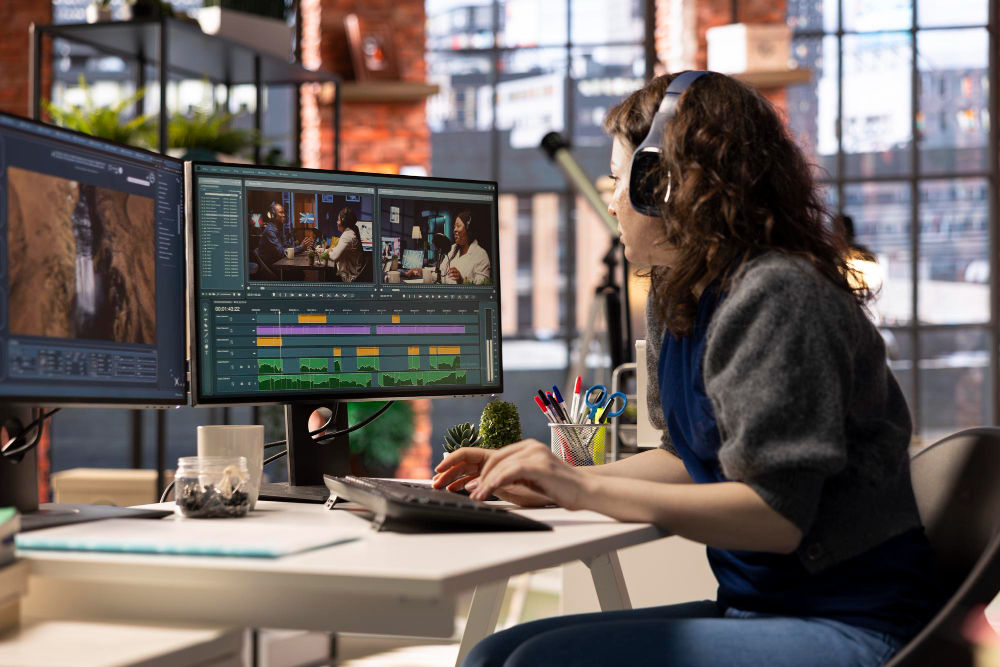

Audio Description (AD) makes visual media accessible to blind and low-vision audiences by adding narrated descriptions of important on-screen elements during natural pauses in dialogue. Think of it like closed captions for the blind. Or like listening to an audiobook, but better — more detailed and nuanced.
Audio descriptions communicate essential visual information like actions, facial expressions, scene changes, costumes, and text appearing on screen. The goal is for blind and low vision viewers to have a similar viewing experience as sighted viewers.
That’s also why it’s something AI hasn’t quite been able to capture yet. Good audio descriptions have that essential human element: empathy.
With the rise of digital and streaming, audio description has transformed from a rare accommodation to an expected asset of professional media. Audio descriptions are now mandated in many broadcast, streaming, and educational environments by the American Disabilities Association (ADA).
Not to mention, they expand your video’s reach and longevity and support inclusivity, from film festivals to streaming platforms.
How Does Audio Description Work?
Audio description is all about describing what’s onscreen as accurately as possible within given time constraints. Like closed captioning and foreign-language subtitling, it’s both art and science.
-
Identifying gaps: First, the program is watched in full to identify available gaps for audio description, especially those with important visuals.
-
Scriptwriting: Next is writing descriptions for each spot. This is where our creative juices come in — writing compelling, accurate descriptions within the time constraints.
-
Revision: The descriptions are then analyzed by our editors to ensure they will fit in the identified windows. In some cases, some lines are paraphrased to fit time constraints.
-
Recording: The script is then recorded by a professional voice talent or a synthetic voice. Synthetic voices are typically used for neutral programs like documentaries or educational programs, while creative programs like films and TV shows will usually require human voices.
-
Review: The recording is reviewed for proper pronunciation and effectiveness.
-
Delivery: AD is typically delivered as an audio file. The audio file may contain just the AD or it may contain the “mixdown,” which includes the source audio and AD.
Let's talk!
Tell us about your needs, and our experts will be in touch. No obligations.
